

Traffic study and Bruce st
Two small city council votes Monday night Oct 20th could shape the future of Warner Robins’ – and most people won’t even notice them.
The first is a parking lot expansion at the North Houston Sports Complex.
Programs at this facility cater to kids, teens, and seniors – the very people who drive the least. Access to this facility should be multimodal, and there’s an opportunity to address that now.
Looking at a satellite image, note not only the neighborhoods to the south and southeast of the complex, but also the straight shot connection from Walker’s Pond to the North Houston Sports Complex along Symes Dr and Bruce St.

These neighborhood streets could be traffic calmed for walkers and bikers, but at the very least the North Houston Sports Complex should have neighborhood connectivity by way of a shared use path through property the city owns at the intersection of Bruce St and Elberta Rd.
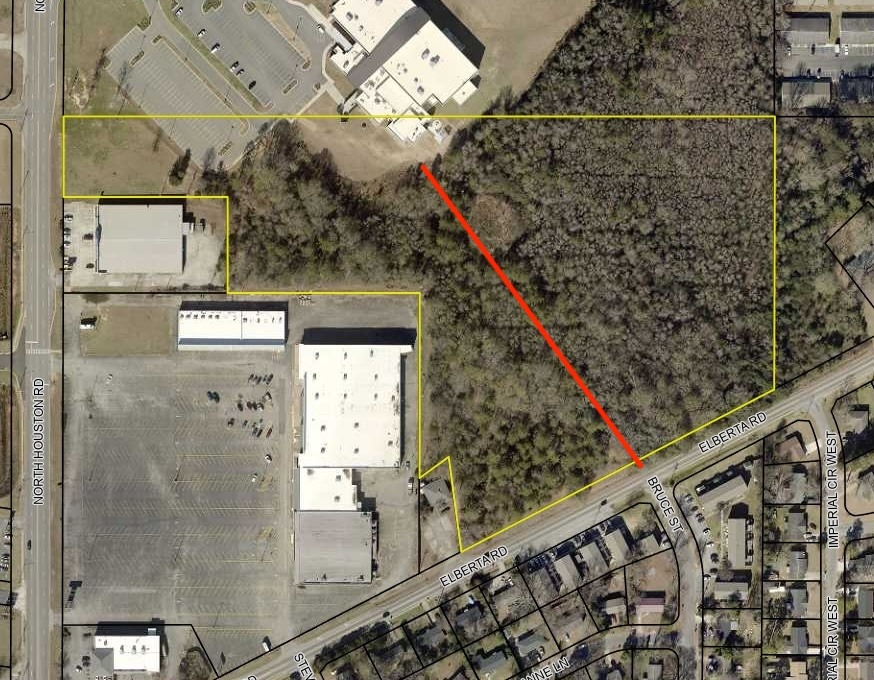
This would complement the Green St corridor project in the WRATS 2050 MPO plan, as well as add a quality of life improvement for a significant number of kids, teens, and seniors living in the adjacent neighborhoods.
While a parking lot expansion is being built, it is the right time, logistically and financially, to add a bike-walk pathway from adjacent neighborhoods – making the facility not just a city asset but a neighborhood amenity, improving safety for non-drivers and reducing car trips for drivers when they choose.
The second item is even more consequential – a proposed traffic study for the Corder Rd and Houston Lake Rd corridor.
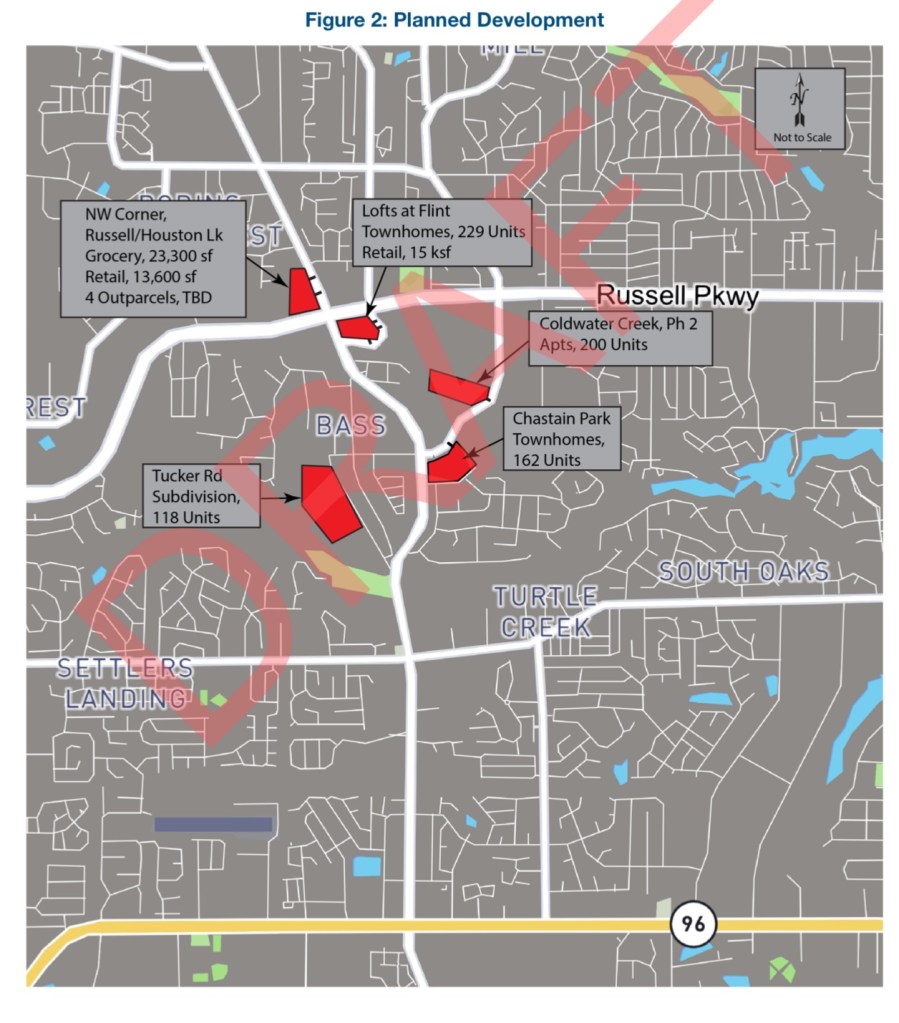
If you’re keeping score, there’s a lot of development already happening and more proposed for this corridor – and many people already call it home.
The easiest way to understand what the city is buying when they spend $21k on a traffic study is an analogy:
When you go to a fast food restaurant, you want fast service. But you also want food that is safe to eat, fresh, served by people who are friendly, in a clean environment.
The traffic study, as proposed, focuses only on speed and volume, at the expense of concerns that matter to families already living in the area.
It will not take into account things like:
– noise pollution
– PM 2.5 pollution
– a safe environment for kids, teens, and seniors
– shade, connectivity to parks, churches, restaurants, and shops.
All things that add to quality of life and improve neighborhood value.
Here is a picture of how the firm proposed for this study depicts “multimodal transportation”. Would you allow an 8 year old to ride on this?
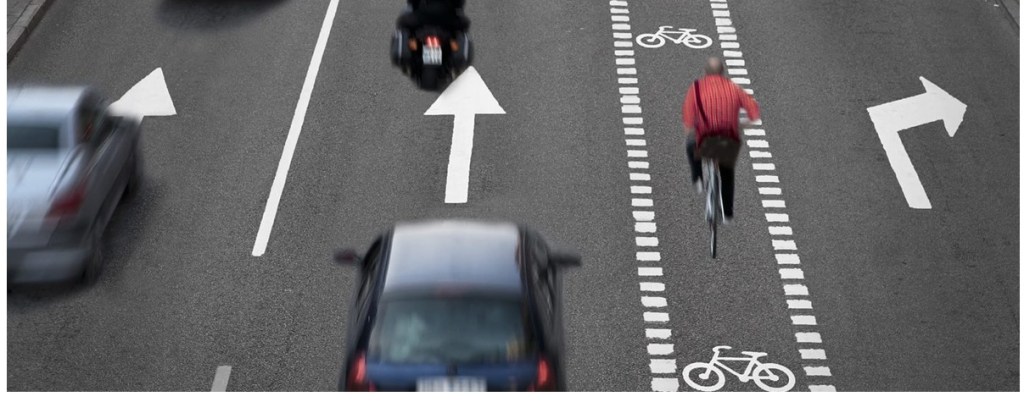
I would personally not hire a firm that would allow a pic like this on their website – to design or influence in any way a corridor that requires a family-friendly foundation.
Or is the goal to add all of these residences, shops, and restaurants only to have the roadways be dangerous, un-crossable highways?
Here’s how an internationally recognized firm depicts a corridor study instead:

.
But who knows what a modern multimodal traffic study might yield for this particular corridor – if done right by a qualified firm.
If residents and city/county leadership are paying more than lip service to quality of life issues, then this traffic study should be deferred until a more complete, multimodal study scope is developed.
There’s no downside to pausing this vote until a qualified firm is identified to evaluate safety, walkability, and long-term livability.
Getting it right matters far more than getting it fast.
Our city deserves planning that spreads value, not just asphalt.
 Ride Robins
Leave a comment