

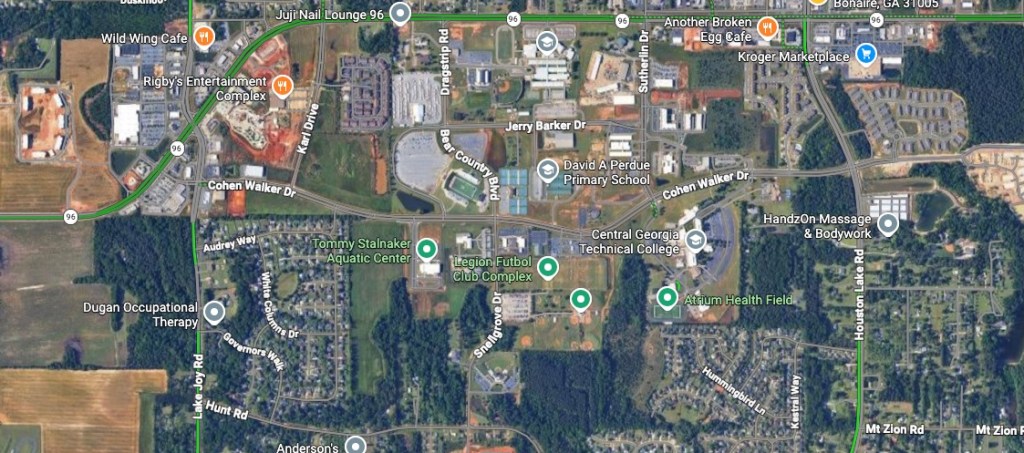
Cohen Walker Drive may be the most overlooked opportunity in Houston County.
For roughly two miles, it connects Houston Lake Road and Lake Joy Road through one of the county’s largest concentrations of schools, recreation facilities, and neighborhoods. Students attend school nearby. Families use the aquatic center. Children participate in sports and other activities throughout the area. Rigby’s draws hometown families from across the region. Little League draws a national audience. Restaurants and residences lie within its immediate vicinity.
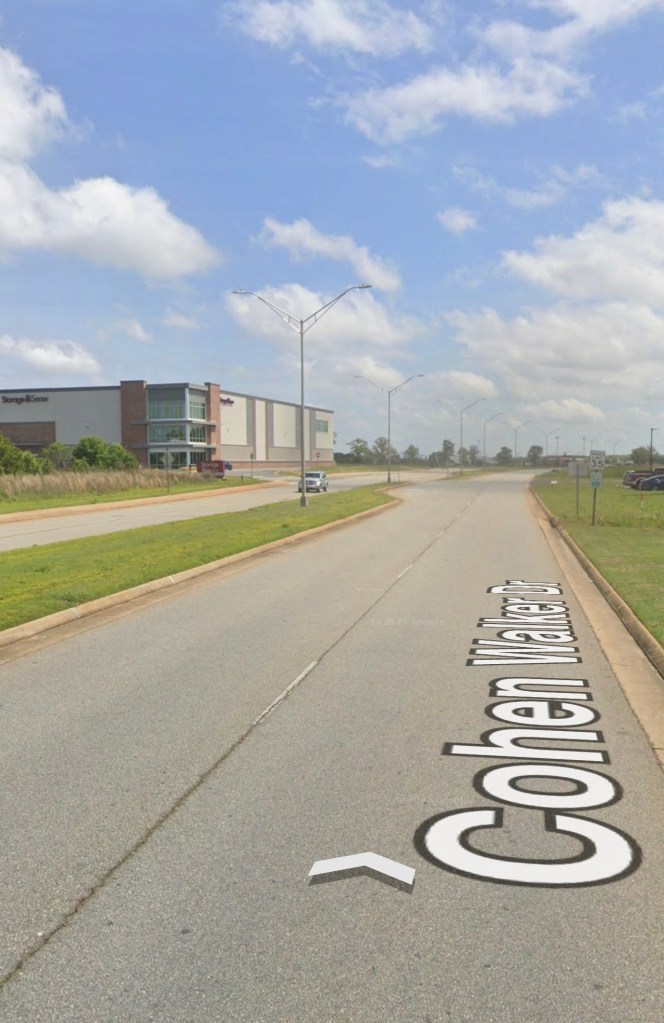
Yet despite the destinations it serves, Cohen Walker Drive is designed as a four-lane divided highway.
That raises a question: if we were building this corridor today, would we really choose to design it this way?
Transportation infrastructure should reflect the places it serves. Cohen Walker is not an industrial corridor. It is not a freight route. It is not an interstate. It is a corridor that primarily serves local trips, families, schools, recreation, and neighborhoods.
Instead of functioning as a highway, it should function as a linear park.
This does not mean closing the road. It does not mean eliminating vehicle access. It means recognizing that a corridor serving so many young people and community destinations should do more than move cars from one end to the other.
Today, Cohen Walker consists of four divided travel lanes for roughly two miles. Under this proposal, the inside lanes would remain open to traffic while the outside lanes would be repurposed for walking, biking, landscaping, and safer crossings. The result would preserve vehicle access while creating approximately five acres of new public space and nearly four miles of continuous walking and biking space from pavement that already exists.
Imagine children safely biking between destinations. Imagine families walking without feeling like they are next to a highway. Imagine a corridor where recreation and transportation support one another rather than compete for space. Imagine creating a linear park from pavement that already exists.
The best part is that this idea does not require a multi-million-dollar commitment. Before spending significant money, the concept could be tested using tactical urbanism techniques. The outside lane in each direction could be temporarily repurposed using construction barrels, striping, signage, and other low-cost materials while the inside lanes remain open to traffic. Traffic flow, speeds, safety, and public response could then be evaluated during school days, weekends, swim meets, and other athletic events.
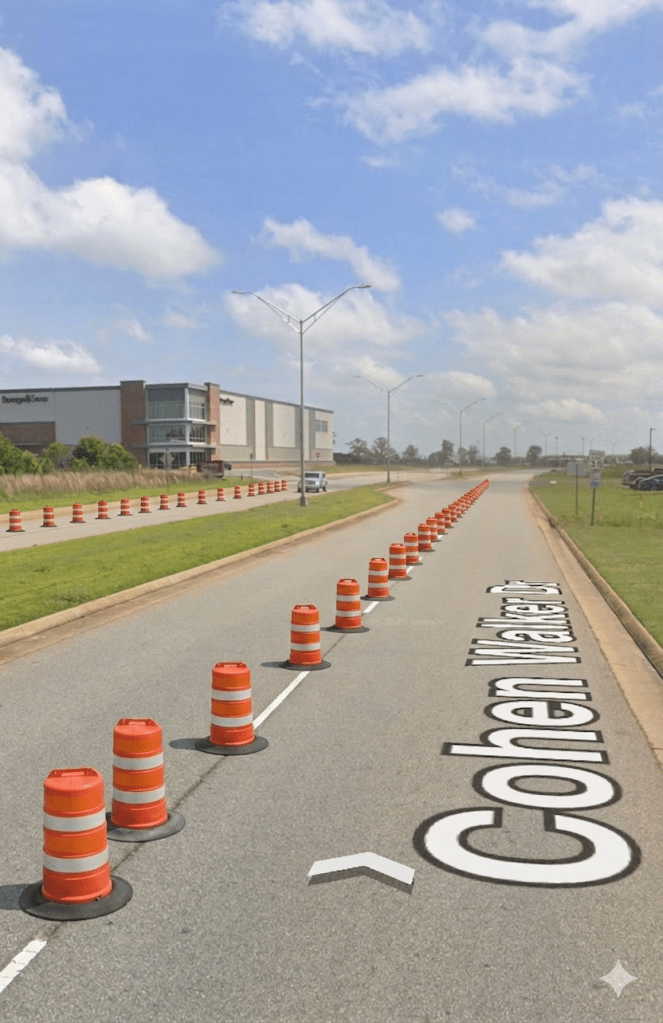
If the concept works, permanent improvements could follow. If it doesn’t, the barrels could be removed and the roadway returned to its current configuration.
Too often, transportation discussions focus on how quickly we can move vehicles. A more important question is whether our streets help connect people to the places that matter most in their daily lives.
Cohen Walker Drive already sits at the center of one of Houston County’s most youth-oriented areas. The destinations are already there.
Should the corridor continue functioning like a highway, or should it become a place that people love?


Leave a comment